
Words from Our Winemaker…
by roche winemaker, michael carr
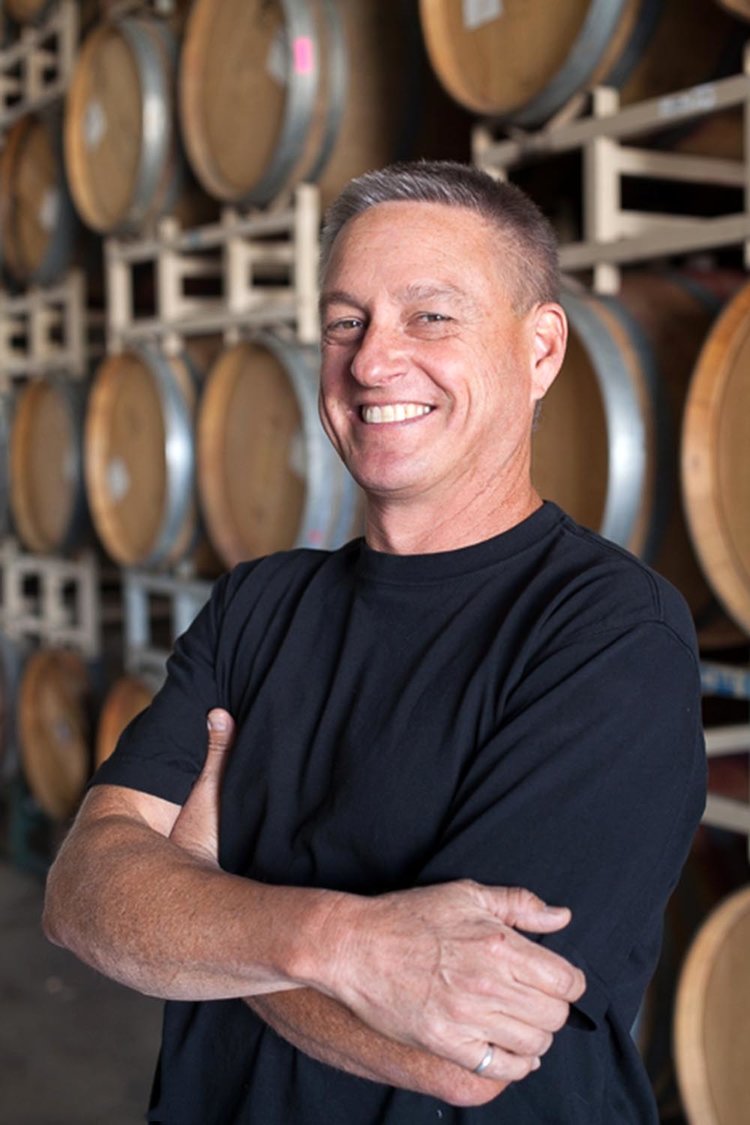 I can’t believe that Summer is almost here! It was only a few months ago that we were singing the Winter blues, all bundled up and wishing for some warm weather. With the weather warming up the vines really start to grow taller, and we even see the berries forming, which leads many people to ask me the first pre-harvest question of: “How is this year looking?”
I get this question throughout the growing season and not that I hate answering, but it is not that simple of a question to answer, especially when harvest is four to five months away. There are many parts to what makes a good or bad year, and several stages during the growing season that are critical.
The first stage of the season is budbreak, and this normally happens in March, maybe late February. This year we had a fairly normal Winter temperature range, but when we got to mid-March we had record heat—up to the low 90s—and we had it for what seemed like a week. This tricked the grapevines into thinking Winter was over, and the buds started emerging very quickly only days into the heat wave. Some blocks really grew quickly such as our Chardonnay, and I don’t think I have ever seen Chardonnay that tall by mid-April. The large amount of growth isn’t so important, but the early growth is. We used to say that April 15th (Tax Day) was the cutoff for frost damage happening, but that was years ago and it seems to be warmer sooner these days, so the worry of frost damage is before and around April 1. Frost during the early growth can kill the new tender shoots, and while other buds with grow, they produce significantly less fruit.
The next critical step in the growing season is flowering. Usually in May we see little flowers on the grape clusters, although they really look like little yellow stems around a central point. The grapes are self-pollenated, not pollenated by bees. The little stems carry the pollen and pollenate the center point, and all that we see is a green cap fall off the recently pollenated berries. This year I saw the flowering happening in April for both the Pinot Noir and Chardonnay, so about a month earlier than usual. The earliness doesn’t affect what we call the “set”, which is how many grapes on each cluster get pollenated, but the weather can affect the set. Rain during flowering does inhibit set, and a lot of rain ate flowering can result in a tiny crop. We always hope for dry days to get the most grapes we can!
The growing season from set until harvest is all about the heat that we accumulate during late spring, summer and even into fall. There are weather stations in our area that record the heat as Heat Summation Units or also Growing Degree Days, and each grape varietal needs a certain amount of heat to fully ripen. Pinot Noir needs less heat units to ripen, while Zinfandel needs a lot of heat units. In rough terms, each hour above 50F during sunlight hours is one heat unit. You can guess that in cold areas it is harder to accumulate heat units and others it is easy – and that’s why certain grapes do well in certain areas. Going back to the summer ripening, each growing season is different based on the weather. Cloudy cool weather slows the ripening, but sunny warm days up to 95F give you full ripening weather. Over 95F the vines actually shut down to prevent water loss, so ripening happens less in the heat waves, plus we worry about the grapes getting sunburned which causes the grapes to shrivel.
So what do I answer when I get asked in May how the harvest season will be? I have to say that I have no idea! We have many months to go, and a lot depends on the next four months, but if all I can see is green leaves then I can say the vines look good.